Team-building activities have long been more than just company outings or fun events. When used correctly, they strengthen team cohesion in the long term, improve communication, and boost motivation within the company. In this guide, you’ll learn why team building is more than just an incentive, how to plan team events with a clear purpose, which formats have proven effective, and what to consider when it comes to location, execution, and follow-up. These tips are aimed at HR managers, executives, and anyone who wants to strategically use company events to benefit employees. Get inspired on how to turn a company event into real added value for your team!
Why Team Building Is More Than Just an Incentive
Team building is often equated with casual outings or rewards for employees. But team-building activities are more than just a nice get-together to boost motivation. Studies show that 90% of employers believe that a sense of community in the workplace contributes significantly to a company’s success. Shared experiences as a team facilitate collaboration, improve communication, and enhance employees’ problem-solving skills. This not only strengthens team spirit but also has a positive impact on work performance and the workplace atmosphere.
What do you really want to achieve?
Every team-building activity should begin with the question: What are we trying to achieve? As a team or among the organizers, think about the purpose the event is meant to serve. Possible goals could include:
- Improving communication: For example, when there are friction points between departments or when silos need to be broken down. In such cases, formats that prioritize exchange and collaborative problem-solving are particularly effective.
- Building Trust: For newly formed teams or following reorganizations, it can be important to build trust and foster a sense of unity. Activities that encourage team members to get to know one another are ideal in such situations.
- Resolving Conflicts: If there are tensions or disagreements within the team, a facilitated workshop can help clear up misunderstandings (e.g., communication training or facilitated feedback sessions).
- Boosting Motivation: Sometimes the focus is simply on thanking the team—for example, after a successful project. A shared experience in the form of a corporate event can then express that appreciation and boost motivation.
The more specifically you describe the desired outcome, the easier it will be later to assess whether the activity was successful. Set priorities: Is the primary focus on fun and team building, on learning and reflection, or on problem-solving? This clarity of purpose will help with all further planning—from choosing the format to follow-up activities.
When to Hold a Workshop and When to Hold an Event
Team-building can take many different forms. Generally speaking, there are two broad categories: formal workshops versus casual events. Which format is best suited to your needs?
- Workshops & Conferences: A workshop (possibly as part of a conference) is a good option if you want to focus on specific topics related to teamwork. For example, a facilitated team workshop can be useful for developing communication guidelines, clarifying roles within the team, or defining shared values. Within a structured framework—such as workshops and conferences with professional facilitation—it’s also possible to address deeper-seated conflicts or practice new work methods. Here, the focus is on learning and reflection. A workshop format is ideal when the goal is to achieve lasting changes in team behavior and there is sufficient time for evaluation and application.
- Corporate Events: A more casual corporate event makes sense when the focus is on fun and a shared experience. These can include company outings, celebrations, or action-packed team-building events. Such corporate events are excellent for strengthening team spirit, creating shared experiences of success, and simply getting together away from the daily work routine. They’re ideal as a reward after strenuous project phases or for onboarding new teams to quickly build informal connections. However, make sure to have at least a loose theme or a common thread so that the activity aligns with the company and the team. A casual event can make a big difference if it’s authentic and everyone feels comfortable—it creates shared memories that sustain a sense of togetherness for a long time.
Of course, these two approaches are not mutually exclusive: A team-building event lasting several days could, for example, include a workshop on the first day and an outdoor activity on the second. The key is to choose what suits your team and your goals. If, for example, you’re aiming for specific improvements in your work processes, at least part of the program should take the form of a workshop. If the focus is primarily on motivation and fun, the event aspect can take center stage.
How to Plan Effective Team-Building Activities
Once you’ve decided on a basic goal and general format, it’s time to start planning. Careful planning ensures that a good idea turns into a successful experience. Below are the most important steps for implementing team-building activities in an effective and practical way.
Analyze the Target Audience and Team Structure
The first step is to analyze your team structure. Every team is different—and not every approach works for every group. So start by considering:
- Who is participating? Is it a small core team, a department, or a cross-functional team with a wide variety of members? The size and composition of the group influence the choice of activity. For example, it’s easier to engage a team of 5 people in in-depth discussions than a team of 50, for which group games or station-based activities might be more appropriate.
- Team dynamics and age composition: A homogeneous team that has been working together for a long time has different needs than a newly formed, diverse team. Younger workforces may be more likely to embrace trendy, action-packed formats, while mixed-age groups have a wide range of interests. Prioritize inclusivity: Activities should not exclude anyone—neither based on fitness level nor personal preferences. If in doubt, you can gather ideas from the team in advance or ask about their interests.
- Location and Work Model: Do you all work in one place, or is your team spread across multiple locations? For remote or distributed teams, digital team-building activities or hybrid events might be a good idea to ensure everyone is included. For teams that meet in person, there’s a wider range of options (from outdoor to indoor). However, you should also consider whether all team members are on-site or if travel arrangements need to be made.
By carefully analyzing the target audience for the initiative, you increase the likelihood that everyone involved will feel included. Even the best ideas are of little use if they don’t address the team’s interests or needs. So: Get to know your team (even better) before you finalize the event!
Determine the timeline, budget, and framework
The next step in the planning process involves the organizational framework. This framework sets the parameters within which you can be creative:
- Time Frame: Consider when and how long the team-building activity should take place. Do you have a full day, an afternoon, or just a few hours in the evening? Different formats are suitable depending on your time budget. For a half-day workshop, for example, you’ll need at least 4 hours, while a short team game can be completed in as little as 30 minutes. Also consider the season: Outdoor activities work better during the warmer months; conversely, a pre-Christmas indoor event in winter can have a lot of charm.
- Budget: Set a realistic budget from the start. This includes costs for the venue, food and beverages, any external trainers or service providers, materials, and travel. Team building doesn’t have to be expensive—there are also low-budget ideas like group hikes or a picnic in the park. But if, for example, you’re planning a corporate event with elaborate arrangements (catering, entertainment, etc.), you should keep an eye on the costs. It’s worth comparing quotes from different event providers. Pro tip: Also ask internally whether the company has a set budget per employee for professional development or team events.
- General Conditions: Clarify the key details. How many people will be attending? Are there any specific requirements (e.g., accessibility of the venue, dietary needs for catering)? What equipment is needed (projector, Wi-Fi, presentation materials)? The more precisely these details are established in advance, the more effectively you can select a suitable event venue and activity. Nothing is more frustrating than realizing at the last minute that, for example, the room is too small or essential equipment is missing. A checklist helps ensure you think of everything—from weather contingencies (a Plan B in case of rain for outdoor events) to the question of who will document the results.
By defining the timeline, budget, and parameters early on, you lay the foundation for a successful team event. With these guidelines in place, you can now delve into the specifics: finalize the format, request quotes, and take a closer look at the most popular options.
Finding the Right Venue
Even the best idea is of little use if the conditions aren’t right. An often-underestimated factor in the success of team-building activities is choosing the right location. Whether it’s a meeting room, an outdoor venue, or a virtual setting—the location must be a good fit for the format and the team. Here are a few tips on what to look for when searching for a location.
Requirements for Space, Technology, and Flexibility
First, think about what requirements your team-building activity places on the venue:
- Room Size and Layout: Is the venue suitable for the group size and the activity? For a workshop, you’ll need enough space for a circle of chairs or group tables, and possibly multiple rooms for breakout sessions. For outdoor sports activities, you’ll need an outdoor area or a gym. The space should be neither too cramped nor too large—all participants should feel comfortable and be able to interact easily.
- Technology & Equipment: Check the technical equipment. For indoor venues: Are there projectors, a screen, flip charts, presentation materials, and reliable Wi-Fi? For outdoor venues: Are tents, power outlets, or restroom facilities needed, and are they available? Nothing is more disruptive than realizing in the middle of a workshop that, for example, cables or adapters are missing. It’s best to clarify in advance with the venue provider what is available and what you’ll need to bring yourself.
- Flexibility & Service: A good event venue should be flexible in meeting your needs. Can you customize the space (move tables aside for a game, rearrange the seating, etc.)? What about refreshments—does the venue provide catering, are coffee and cold drinks available, or do you have to organize something yourselves? The booking terms are also important: Can you cancel or reschedule on short notice if, for example, the COVID-19 situation changes or the number of participants fluctuates? Read the fine print. Another consideration is accessibility: Ideally, the venue should be easy for everyone to reach (centrally located or with a shuttle service). For off-site venues in nature, transportation may need to be arranged.
In short: Make a list of requirements for the venue. Then you can search specifically and compare providers. Many venues offer special packages for workshops, conferences, or corporate events—this can be helpful because such packages usually combine space, technology, and catering.
Event venue for meetings, workshops, or corporate events
Depending on the format, different types of venues may be suitable. Here are a few examples:
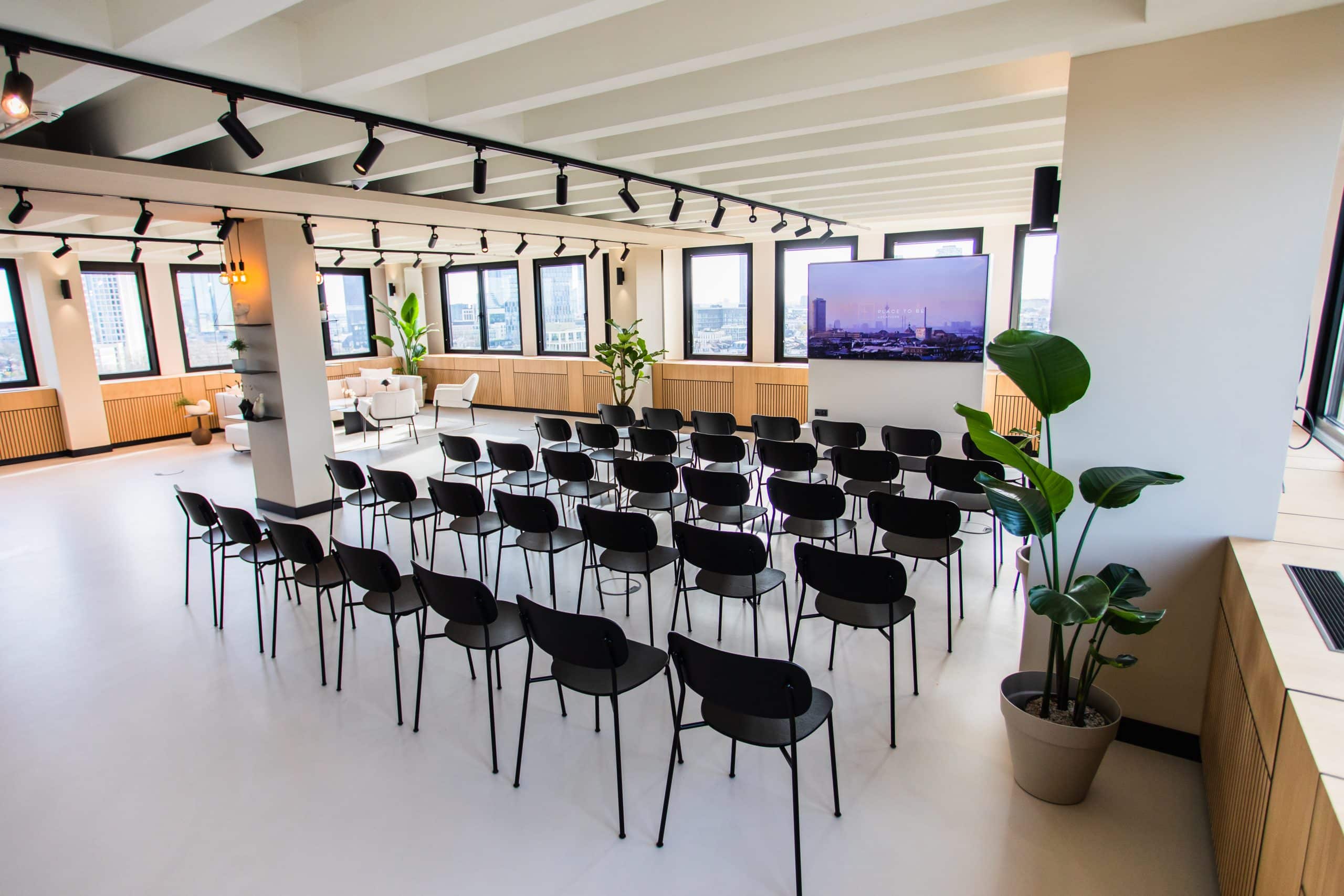
- Traditional meeting room or seminar room: Conference rooms or seminar rooms are ideal for workshops and seminars with up to about 20 people. Make sure there’s plenty of natural light and a pleasant atmosphere—sparse, windowless rooms can quickly dampen the mood. In larger cities, there are specialized providers that rent out meeting rooms complete with workshop equipment. (For example, if you’re in the Rhineland: A centrally located meeting room in Düsseldorf with modern technology might be a good option if your team is from North Rhine-Westphalia.) Such rooms are ideal when the team activity is content-focused and requires concentrated work.
- Event Venues for Businesses: If you’re planning a larger corporate event or an anniversary team-building day, it’s worth considering a dedicated venue for corporate events. This could be an unconventional venue—such as a loft, an industrial hall, an outdoor camp, or even a ship. Here, the focus is on the experience and atmosphere. Many event venues offer all-inclusive packages that include catering, technical equipment, and a supporting program. It’s important that the venue is suitable for the number of attendees: 50 people will feel lost in a large exhibition hall, while 200 people will feel cramped in a small venue. Also consider the season: in the summer, perhaps an open-air venue or one with an outdoor area; in the winter, something with a cozy indoor space. Examples: For an international team meeting, a venue near an airport might make sense; for an outdoor team-building event in Hesse, perhaps a site in the countryside rather than in the middle of Frankfurt.
- Unconventional Locations: Sometimes it’s the unusual setting that makes an event unforgettable. How about a team-building event at a farmstead or a climbing park, where you can work during the day and gather around a campfire in the evening? Or a cultural center where the team can take a graffiti workshop together? Feel free to think creatively—but don’t forget the logistics (travel, accommodations if needed, permits). You can also consider virtual locations: For online events, there are platforms that offer virtual spaces with team-building activities.
Whether it’s a meeting room in Düsseldorf, an outdoor camp near Frankfurt, or your own corporate headquarters: Tailor the venue to your needs, not the other way around. It’s better to choose a smaller, more intimate space than an overly large, inflexible solution. If possible, visit the venue in person beforehand or take a virtual tour to get a feel for it. And if in doubt, ask for advice—many event venues have experience with team events and can tell you whether your idea is a good fit there.
Implementation and Follow-up
Once the planning is complete and the day of the event is approaching, it’s time to focus on the execution. This is where it’s determined whether all that good preparation will actually result in a successful team-building event. Two phases are particularly important: the facilitation and structure of the event itself, and the follow-up afterward—that is, reflection and applying what was learned to everyday life.
Facilitation and Program Structure
A team-building event—whether it’s a workshop or an outdoor activity—needs a central theme. So be sure to establish a clear schedule in advance. The following points will help you carry it out:
- Clarify the facilitation role: Who will lead the program? Having a neutral facilitator or game leader is invaluable, as it allows all participants to focus on the content or activities. For formal workshops, it makes sense to bring in an external trainer or an experienced in-house facilitator. For game-based events, an agency team or an experienced colleague can also take on the role of facilitator. The main thing is that there is someone who keeps track of everything, guides the group, and steps in when necessary (e.g., if something is unclear or if individuals withdraw).
- Structure the session: Divide the day (or the hours) into meaningful segments. Start with an icebreaker or warm-up to get everyone involved. The main part of the program consists of the planned activities or workshop sessions. Be sure to schedule breaks—especially during more intensive activities, participants need time to rest or engage in informal conversation over coffee. To wrap things up, it’s a good idea to have a clear closing, whether it’s a final game, a brief summary, or simply a group photo and words of thanks. Feel free to share the general outline in advance so everyone knows what to expect (at least key details like start time, end time, and breaks).
- Flexibility on the spot: Plan as thoroughly as possible—but remain flexible if the schedule needs to be adjusted. You may find that an exercise takes longer because a discussion has gotten going—in that case, take the time if it serves the goal. Or the weather may force you to change your plans. A good facilitator reads the group’s mood and adjusts the pace accordingly. It’s important to build positive energy: Small successes along the way (such as completed tasks or winning team games) keep everyone motivated. During outdoor activities, pay attention to safety and, if necessary, stop before anyone gets overwhelmed. Overall, remember: The schedule is a guide, not a rigid framework.
During the event, the team takes center stage. That also means that the organizers should stay in the background, enjoy themselves, and observe what’s happening. That way, you’ll be able to evaluate the event more effectively later on.
Reflection, Feedback, and Transfer
After the big day comes the impact—in other words, team building only unfolds its full potential through reflection and follow-up. This step is often overlooked, yet it’s crucial for ensuring that the insights and positive effects are carried over into everyday work. How can you go about this?
- Group Reflection: At the end of your team event, set aside a few minutes to a few hours (depending on the intensity) for a group reflection session. Ask the group: How did you find the activity? What was your highlight? What will you take away from this to apply to your collaboration? In workshops, it’s common to summarize the results at the end (e.g., a flip chart with key takeaways or agreements for the team). Even at more casual events, you can use the wrap-up discussion to acknowledge the good moments and try to build a bridge to everyday life (“What can we do to ensure this sense of togetherness continues in the office?”). This wrap-up session should maintain a positive tone—it’s not about analyzing mistakes, but about insights and bringing the event to a close.
- Gathering Feedback: Not everyone feels comfortable speaking up in a group setting. Anonymous feedback can be a helpful supplement. Consider sending out a short feedback survey after the event. It could include questions such as, “Did you enjoy the team event? Did you learn anything new about the team? What can we do better next time?” The feedback helps the organizers improve future events and gives everyone the opportunity to honestly express their opinions. Anonymous feedback often provides valuable insights, such as that someone would have liked more structure or that the duration was just right.
- Ensuring Transfer: This is perhaps the most important point: How do you ensure that the positive momentum continues? There are various approaches here. One option is to plan follow-up activities—for example, a brief follow-up meeting a few weeks after the event or a retrospective during a team meeting where you ask: “What has changed since our team event? Are we still implementing any of those changes?” If specific actions were developed during the workshop (such as “we’ll use first names across departments now” or “we’ll have a team lunch every two weeks”), then someone should take responsibility for ensuring these agreements are followed through. Managers serve as role models here: They can repeatedly refer to the event in their day-to-day work (“Remember how collaboration X worked so well during the raft-building activity? Let’s do the same thing here”). Symbolic reminders also help—hanging a group photo in the office, creating an internal wiki with the results, or incorporating little inside jokes from the event into meetings. Anything that keeps the experience alive is welcome.
In summary: Follow-up ensures that your investment in team building is truly worthwhile. The initiative is only successful if the team experiences tangible benefits in their day-to-day work—such as better communication, greater trust, or simply a more positive atmosphere. Through reflection and application, you can turn a one-time event into lasting change.
This is how you create lasting momentum for your team
A successful team-building event can serve as a catalyst for a new team dynamic. As you’ve seen, clear goals, careful planning, the right format, and a suitable location are crucial to ensuring the event is more than just a short-term incentive. When all these elements come together, you create experiences that stick in people’s minds and have a positive impact on their day-to-day work. Team spirit is strengthened, communication improves, and—last but not least—employee retention increases—your colleagues realize that you’re investing in their development and satisfaction.
It’s important to keep sustainability in mind: A team event shouldn’t be a one-time thing, but rather part of a culture that actively fosters collaboration and a sense of togetherness. Plan regular small activities, make time for feedback sessions, and celebrate your shared successes. This creates a common thread that transforms a one-time experience into long-term motivation.
Our Venues for Your Team Event in Frankfurt & Düsseldorf
Whether it’s a creative workshop, a strategic offsite, or a group after-work get-together—at Place to be, you’ll find the perfect venue for your team event. Here’s a selection of our venues and offerings that are ideal for team-building activities:
Workshops & Conferences – For focused work in an inspiring atmosphere.
Corporate Events – Experiential team-building: from summer parties to anniversary celebrations.
Meeting Room in Düsseldorf – Ideal for smaller team meetings with a professional setup.
Christmas Party in Frankfurt – The perfect way to wrap up the year for your team.
Party Venue in Düsseldorf – For relaxed team evenings after a productive workshop.
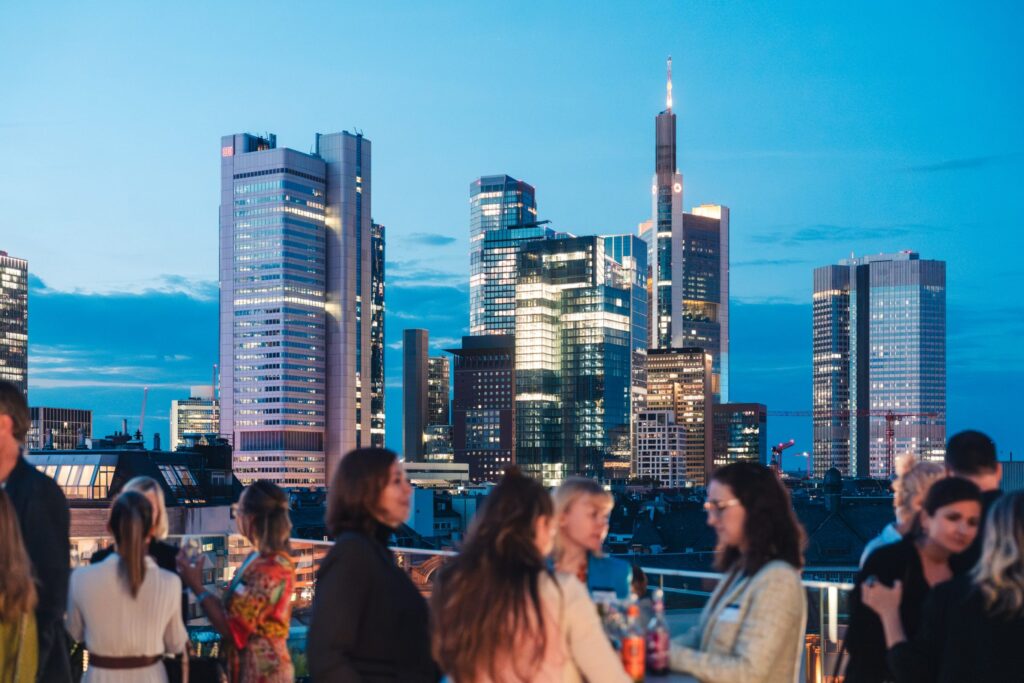
Frankfurt Venue with a View of the Skyline – An exclusive setting for special team events.
Each of our venues can be flexibly adapted to your needs—for team events that leave a lasting impression and strengthen team spirit.
Frequently Asked Questions
What is the difference between team building and a team event?
Team events are typically casual, group activities designed to strengthen team cohesion—such as an outing or a group dinner. Team-building activities, on the other hand, have a clear objective, are often supported by specific methods (e.g., workshops), and aim to improve specific aspects of teamwork.
How often should team-building activities take place?
That depends on the team and its goals. As a general rule, it’s a good idea to hold a larger team event at least once a year. In addition, smaller activities—such as a monthly team lunch or brief team reflections—can help to continuously strengthen team cohesion.
For which teams are team-building activities particularly beneficial?
Newly formed teams, teams that have undergone restructuring, or teams with recurring conflicts benefit the most. But even established teams that need a fresh start or simply want to strengthen their bonds can benefit from targeted measures.
What should you do if not all employees can attend the team event?
It’s not always possible to get all team members together—whether due to vacation, illness, or other commitments. It’s important to communicate transparently why the event is taking place and how participants will be involved. For larger events, a second, smaller version can be planned for those who are absent. Alternatively, a follow-up report or a group discussion during the next team meeting can help engage those who weren’t present emotionally and strengthen team spirit.